

Could AI Give iPhone Jailbreaking a New Purpose?
As established developers step back, AI-assisted security research and controlled automation offer a possible new direction for a changing community.
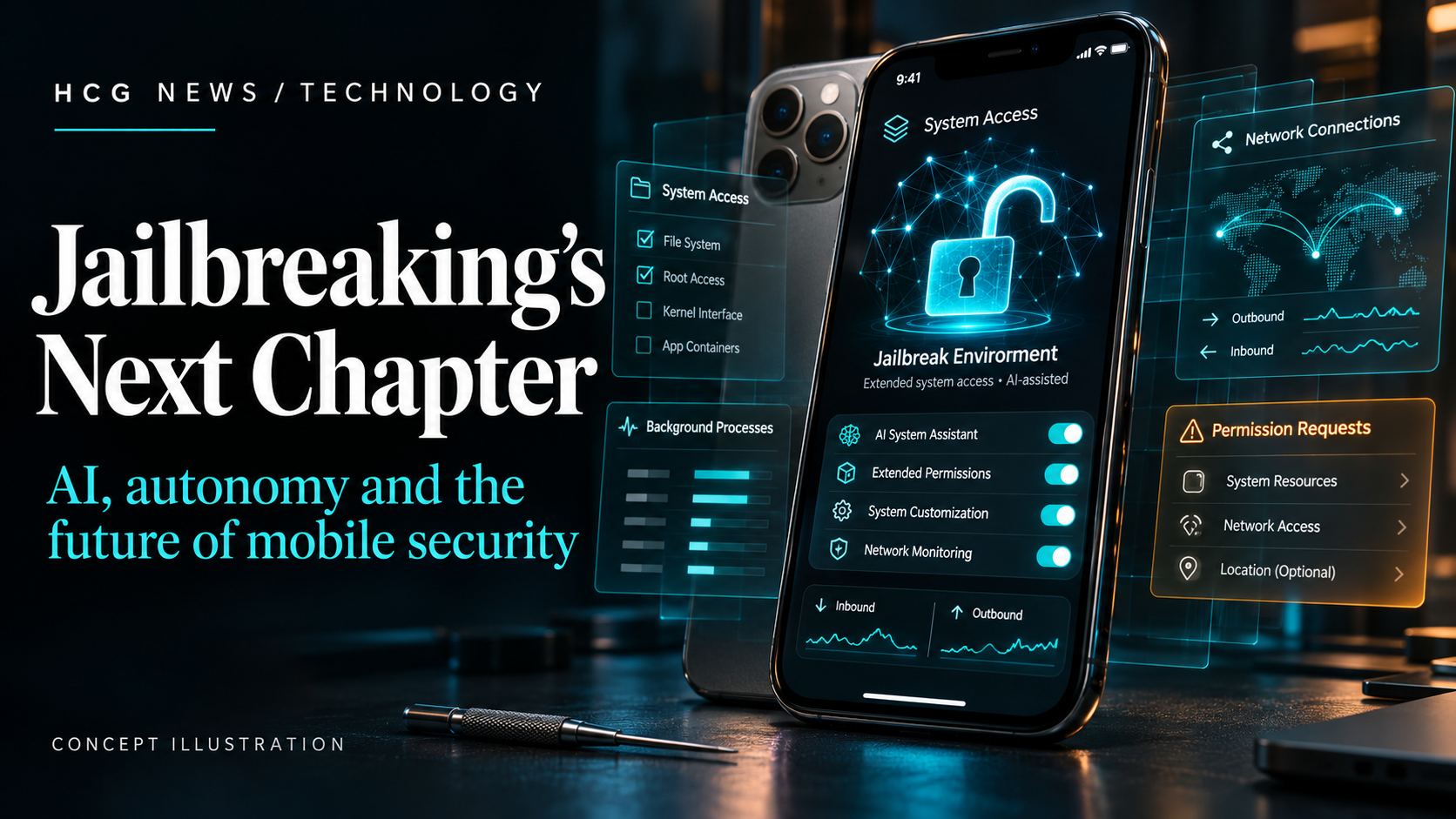
Analysis | By Yasin Ludvigsen Hakmi
Jailbreaking has long represented a desire for greater control over the devices people own. Today, that ambition intersects with a much larger technological shift: artificial intelligence that can help people understand software, investigate problems and automate increasingly complex tasks.
The opportunity goes beyond changing icons or rearranging a home screen. On an appropriately configured research device, deeper system access could support AI-assisted diagnostics, more transparent monitoring and carefully controlled background services.
That is a promising direction for experimentation. It is also one that demands a clear distinction between gaining control and improving security.
The jailbreak community has experienced significant departures. In April 2023, CoolStar, the developer behind projects including Electra, Chimera, Odyssey and Taurine, announced her departure and the cancellation of Cheyote. Her explanation described changing interests, technical difficulties and community harassment—not simply a shortage of users. idownloadblog.com
SparkDev, known for the SnowBoard theming engine and other tweaks, now labels its jailbreak repository as legacy. Its website says general active development has stopped, although updates to primary tweaks may still appear when needed. These are meaningful changes, but they do not establish how many people have stopped jailbreaking worldwide. SparkDev
Nor has development disappeared. Dopamine remains a publicly maintained jailbreak project with published releases. The picture is of an evolving ecosystem with continuing work alongside prominent departures. GitHub
AI could provide a reason for developers to explore that ecosystem again.
There is already evidence that AI assistance can improve some cybersecurity tasks. A Microsoft research presentation published in May 2024 described an experiment involving 149 security novices. Participants using Copilot were 44% more accurate on multiple-choice questions and, holding accuracy and quality constant, completed work 26% faster.
Those results concern a particular vendor’s controlled experiment. They do not demonstrate that AI can secure a jailbroken iPhone. They do, however, support the narrower argument that AI can help people interpret security information and perform certain analytical tasks more effectively. microsoft.com
For mobile security researchers, deeper access already has practical value. OWASP’s Mobile Application Security Testing Guide describes how jailbroken devices enable filesystem access, debugging, dynamic analysis and inspection of application runtimes. These capabilities can help researchers investigate how their own applications handle sensitive information. OWASP Mobile Application Security
An AI assistant could build on that visibility. A proposed tool might correlate crash reports with recently installed software, explain unusual process behaviour, review configuration changes or help a developer interpret an application’s network activity.
The useful innovation would be turning technical evidence into understandable decisions. It would still require reliable instrumentation, appropriate permissions and verification of the model’s conclusions.
Background execution is another part of the discussion. Apple normally suspends ordinary applications shortly after they move into the background, while providing specific mechanisms for permitted background work. Suspension is a deliberate resource-management policy, rather than simply an application malfunction. Apple Developer Documentation
Apple explains that these restrictions help protect battery life, privacy and foreground performance. Backgrounding an application and explicitly force-quitting it are also different actions; a security design must account for its actual execution lifecycle. Apple Developer
For an experimental security platform, allowing a narrowly scoped monitoring service to continue working could improve continuity of observation. The sensible objective would be persistent monitoring where it is justified, with explicit resource limits and visible controls—not unrestricted background execution for every application.
Such a system could examine both directions of activity: suspicious incoming connections to exposed services, and unexpected outgoing communications from applications or background processes. Network observations could then be compared with local events, such as software installation or configuration changes.
This is a proposed architecture, not a claim that a currently available jailbreak tool provides complete protection. Encrypted communications, missing telemetry and compromised monitoring components would all limit what it could reliably detect.
The security trade-off must remain explicit. Apple’s platform protections include sandboxing, entitlements and restrictions on executable memory. Jailbreaking bypasses security mechanisms, and Apple warns that unauthorised modifications can introduce vulnerabilities and instability. Adding an AI monitor does not recreate those protections. Apple Support (UK)
An AI-assisted tool might therefore improve detection compared with the same jailbroken device running without monitoring. That is a different claim from proving it safer overall than an updated, unmodified iPhone.
To establish a genuine improvement, developers would need comparative testing: missed attacks, false alarms, response times, battery impact, recovery behaviour and resistance to tampering. A compelling demonstration would show measurable outcomes under a defined threat model.
Rules for automation would be essential. OWASP identifies excessive permissions, functionality and autonomy as risks in AI systems. It recommends limited tools, least privilege, human approval for consequential actions and authorisation enforced by downstream systems rather than left to the model’s judgment. OWASP Gen AI Security Project
Applied to a mobile security assistant, that means the AI could analyse events and recommend action while a separate policy engine determines what is permitted. Pre-approved, reversible responses could be narrowly automated. Changes to security policy, credentials or important system files should require the owner’s explicit approval.
Logs, web content and package descriptions must remain evidence to analyse, not instructions the assistant is allowed to obey. Otherwise, malicious content could attempt to manipulate the very tool intended to protect the device.
There is a wider reason to take automation seriously. Imperva’s 2026 Bad Bot Report estimates that automated bots accounted for more than 53% of web traffic in 2025, compared with 51% in 2024. These are vendor-reported web-traffic figures, not a census of all internet activity, and bots are not synonymous with AI. Nevertheless, they illustrate the scale at which automated systems already operate. imperva.com
For jailbreaking, 2026 could become a year of renewed experimentation around AI. Whether that produces broader adoption remains an open question. The evidence does not yet justify declaring a comeback.
The more constructive ambition is to build tools that earn trust: understandable diagnostics, independently enforced permissions, transparent monitoring and automation that remains accountable to the device owner.
Jailbreaking may provide one laboratory for that work. Supported development tools and other platforms offer additional routes, and learning AI does not require modifying a phone’s operating system.
The time to learn is now. Learn how AI works, how to test its conclusions and how to decide where its authority should end. Greater technological freedom becomes more valuable when it comes with greater understanding.
To the developers and researchers continuing that work: thank you for keeping curiosity alive—and for helping turn ambitious ideas into tools people can trust.

Owner of Hakmi Capital group and all HCG products advertised as HCG By Hakmi capital group, a Hakmi Capital Group (Plattform, system, development, etc)
More about this authorContent type: Opinion. See our editorial policy and corrections policy.
Related
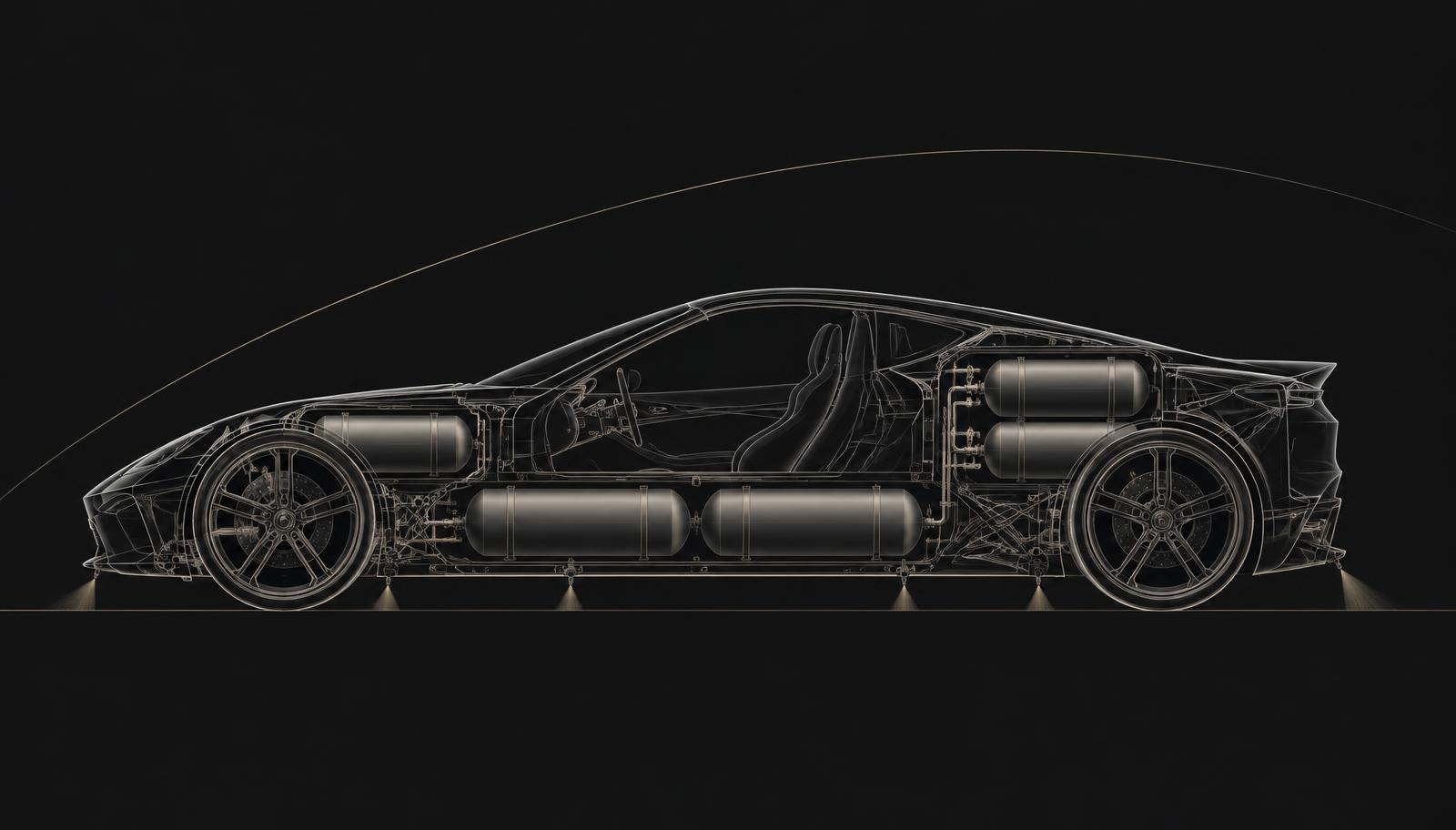
Tesla's Flying Roadster Is Real Engineering. It Is Not Yet a Product.
Tesla's new Roadster left the ground on 15 October — briefly, and with no one inside. Our inaugural feature separates the engineering from the expectations.